Loading and analyzing data...

Analysis is being performed...

❄️ Mushrooms in late autumn and winter

Winter mushrooms

When porcini and chanterelle are gone, the best time begins for a handful of species. They grow on wood and in leaf litter – often right when a thaw follows frost.

Near you today

With a free account you see the daily chance for winter mushrooms at your home town here. For any other place use the mushroom forecast.

Sign up for free Forecast for a place →

These mushrooms grow in winter

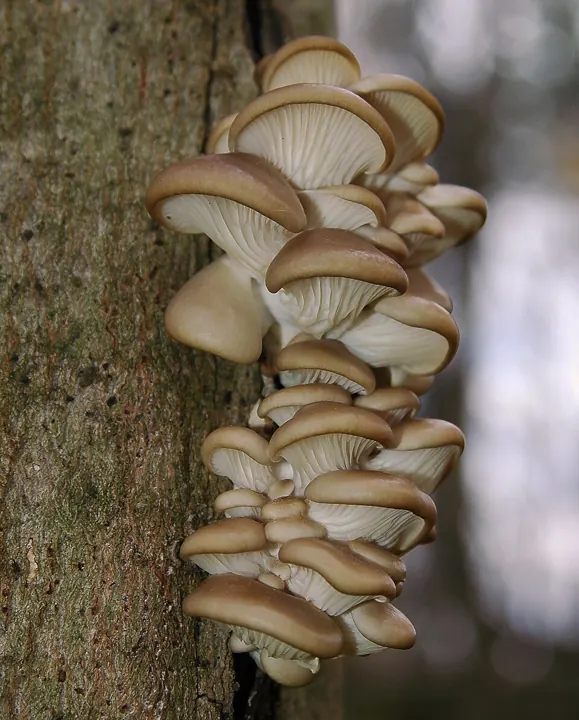
Photo: Hamilton / Mushroom Observer, CC BY-SA 3.0 · Wikimedia Commons

Oyster Mushroom

Pleurotus ostreatus

Where: In overlapping clusters on trunks and stumps of broadleaf trees, especially beech, also poplar and willow.

When: November to March, best when a thaw follows frost.

⚠️ Look-alikes: other oyster-like species, late oyster (Panellus serotinus) – Profile

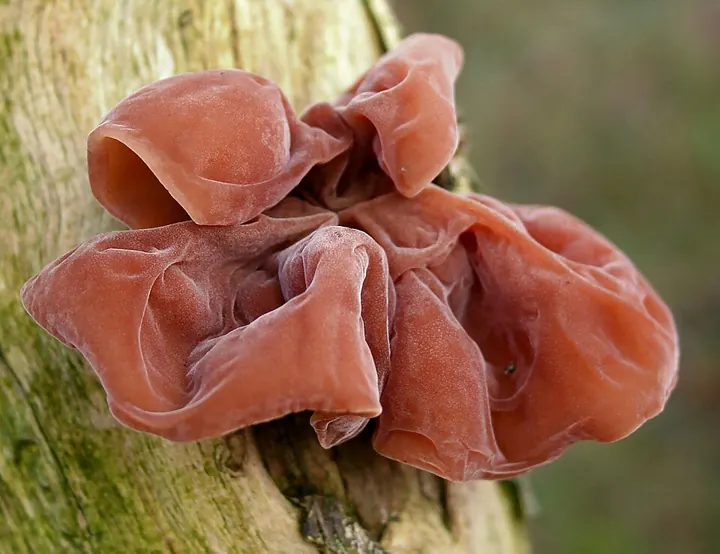
Photo: Svdmolen, CC BY-SA 3.0 · Wikimedia Commons

Judas’ Ear

Auricularia auricula-judae

Where: Almost only on elder, on living and dead branches – often at forest edges, hedges and streams.

When: All year, most in the damp winter months; dries out in frost and swells again with rain.

⚠️ Look-alikes: tripe fungus (Auricularia mesenterica) and other jelly fungi – Profile

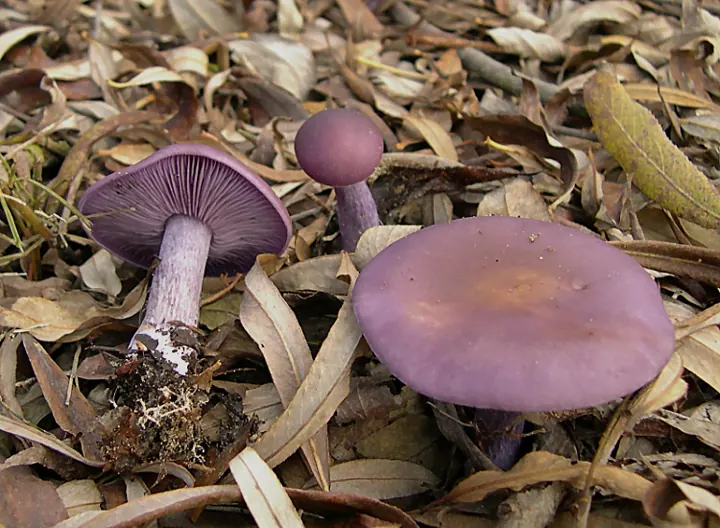
Photo: Archenzo, CC BY-SA 3.0 · Wikimedia Commons

Wood Blewit

Lepista nuda

Where: In leaf and needle litter, at forest edges, often also on compost heaps and in parks.

When: October to December, often until the first hard frost, longer in mild winters.

⚠️ Look-alikes: violet webcaps (Cortinarius) – dangerous look-alikes – Profile

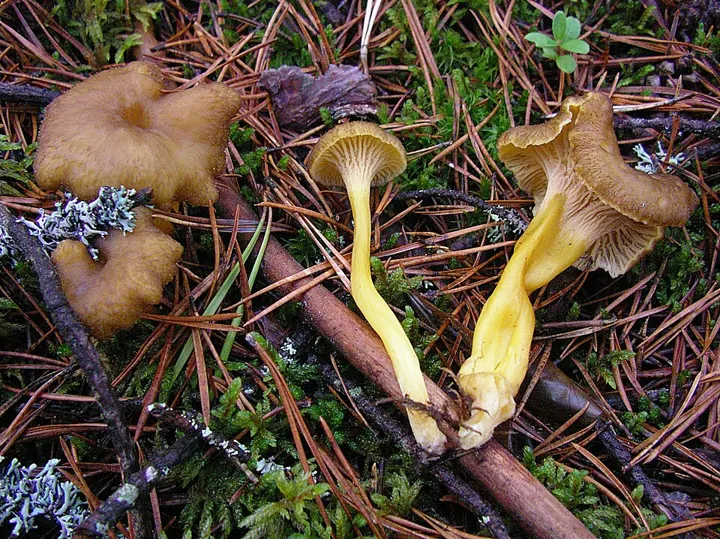
Photo: Ripa, Public domain · Wikimedia Commons

Trumpet Chanterelle

Craterellus tubaeformis

Where: In mossy conifer forests on acidic soil, often in large groups under spruce.

When: September to December, tolerates light frost.

⚠️ Look-alikes: other chanterelle relatives – Profile

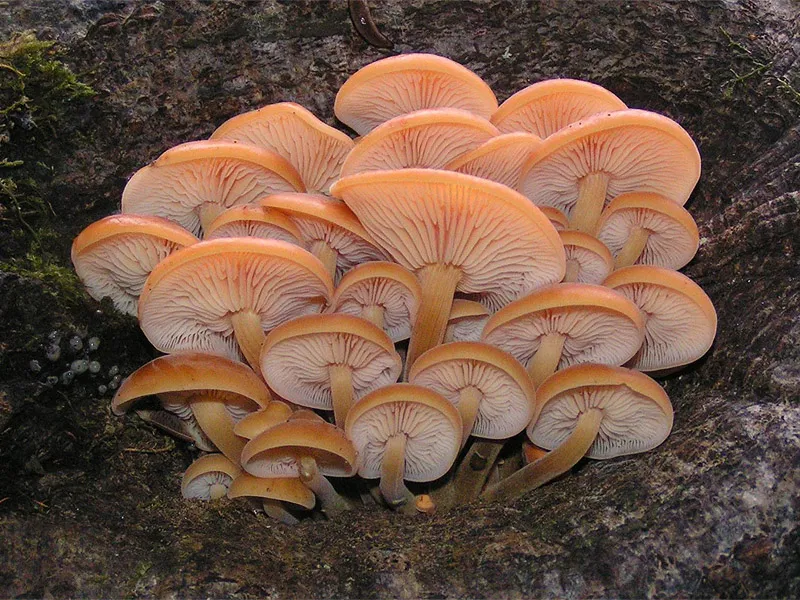
Photo: Eric Steinert, CC BY-SA 3.0 · Wikimedia Commons

Velvet Shank

Flammulina velutipes

Where: In clusters on dead and weakened broadleaf wood, often willow, poplar, ash and elder, frequently in floodplain forests and along streams.

When: November to March. Tolerates frost, thaws and keeps growing.

⚠️ Look-alikes: funeral bell (deadly poisonous), sulphur tufts – Profile

🛡️ We never say whether a mushroom is edible. Have every find checked by a mushroom advisor – winter has dangerous look-alikes just like autumn. Mushrooms for beginners →

Pro analysis for winter mushrooms at your place →

How to forage in winter

After the frost

The best days are mild and damp, right after a frost spell ends. In a long frost, growth pauses.

Wood instead of soil

Look at stumps, fallen trunks and dead branches – beech, poplar and elder along streams and forest edges are the best spots.

Short days

Set off early, pack a head torch, watch out for ice. Without leaves you can spot fruiting bodies on trunks from far away.

Plan a winter tour with the forest treasure planner → · Mushroom season over – what now? →

Frequently asked questions

Which mushrooms grow in winter?

Mostly wood dwellers: oyster mushroom on beech and poplar, wood ear on elder. Until December, wood blewit and winter chanterelle add to them. Frost only pauses them – they keep growing after a thaw.

Is it worth foraging in frost?

Hardly in a long frost. Best are mild, damp days after a cold spell – oyster mushroom and wood ear then often appear at the same time.

How reliable is the winter forecast?

The chance is based on weather, soil and tree species in your area. It shows good and bad days – it is no guarantee of finds.