
Early false morel
Verpa bohemica · Thimble morels (Morchellaceae)
PoisonousAlso: Wrinkled thimble cap
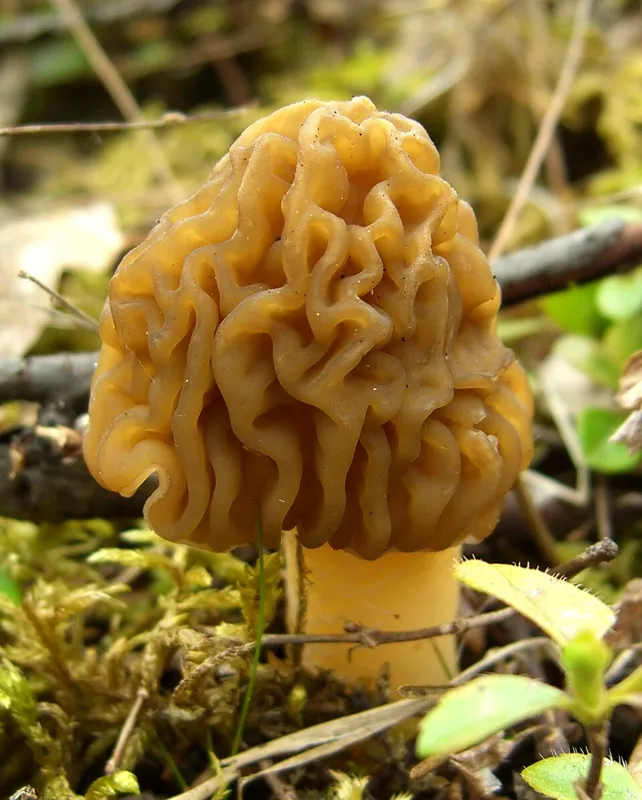
Suspected poisonous. Once traded as edible; stomach and intestinal upset and loss of muscle coordination have been reported after eating it. It probably contains toxins similar to those of false morels.
Recognise it safely – what matters
- Cap attached only at the tip, hangs free like a thimble
- Cap folded lengthwise, no true honeycomb
- Cut lengthwise: stem filled with cottony pith (morel: cap and stem one single hollow)
Features
- Cap
- 2–4 cm, bell- to thimble-shaped, ochre to yellowish brown, wrinkled with lengthwise folds – no true honeycomb pits. Hangs free over the stem and is attached only at the very top.
- Underside
- No gills or tubes; the inside of the cap is smooth and whitish.
- Stem
- 6–12 cm, long and slender, creamy white, finely banded or flaky; filled with cottony pith inside, hollow only when old.
- Flesh
- Thin, brittle.
- Smell
- Indistinct
- Spore print
- Yellowish
Season
JFMAMJJASOND
Habitat
Floodplain forests, stream banks and damp thickets, mainly under poplar, aspen and willow, often in groups. Usually appears in spring shortly before the morels.
andre træarter
Risk of confusion
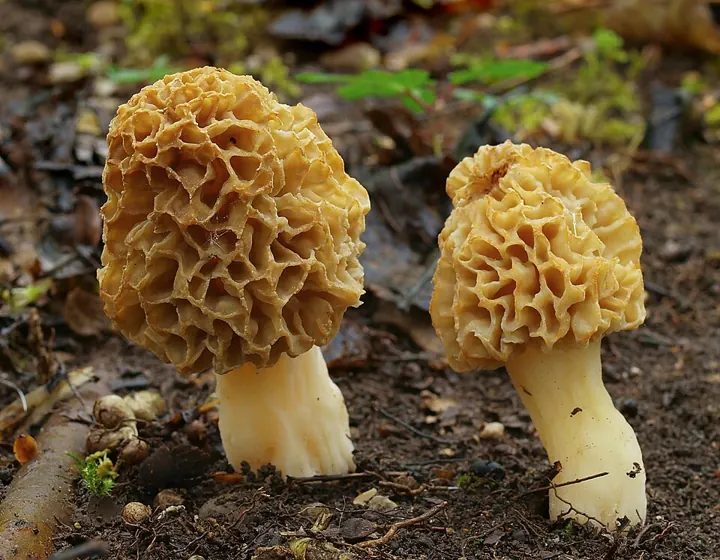 Spiselig morkel Edible species Morels are one single hollow inside, and the cap is fused to the stem. In the thimble morel the cap hangs free and the stem is filled with pith.
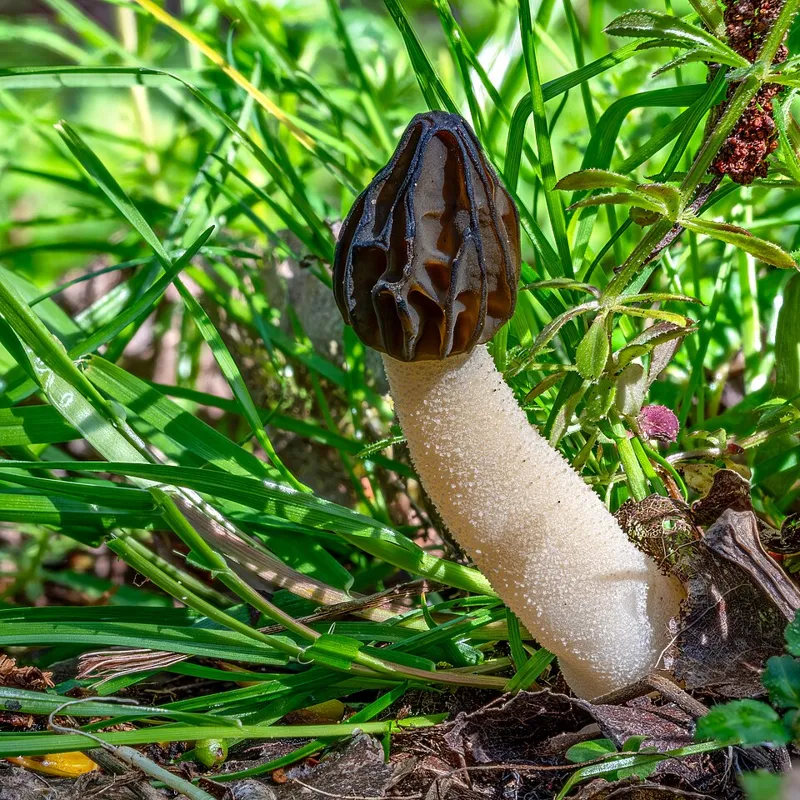 Half-free morel The half-free morel looks most similar: but its cap is attached up to about halfway and has pits between lengthwise ridges; inside it is hollow throughout.
If someone has eaten it
Nausea, vomiting, abdominal pain; in some people unsteadiness, trembling and loss of coordination.
Act immediately – even without symptoms:
- Emergency number 112 if someone feels unwell.
- Poison centre: Germany – area code of the nearest city with a poison centre + 19240 (e.g. Berlin 030 19240, Munich 089 19240) · Austria +43 1 406 43 43 · Switzerland 145.
- Keep leftovers, trimmings or vomit – it helps with identification.
Ready to head out?
❄️ Winter mushrooms What grows now, even in frost – with the chance for your place
🗺️ Mushrooms in your area Region map: forest, typical mushrooms and today’s chance – down to your town
🧭 Plan a walk Short winter walk to the winter mushrooms, back before dusk
Never identify mushrooms by pictures or an app alone. When in doubt, ask a mushroom expert – and only pick what you know for sure.