
Death cap
Amanita phalloides · Amanitas (Amanita)
Deadly poisonous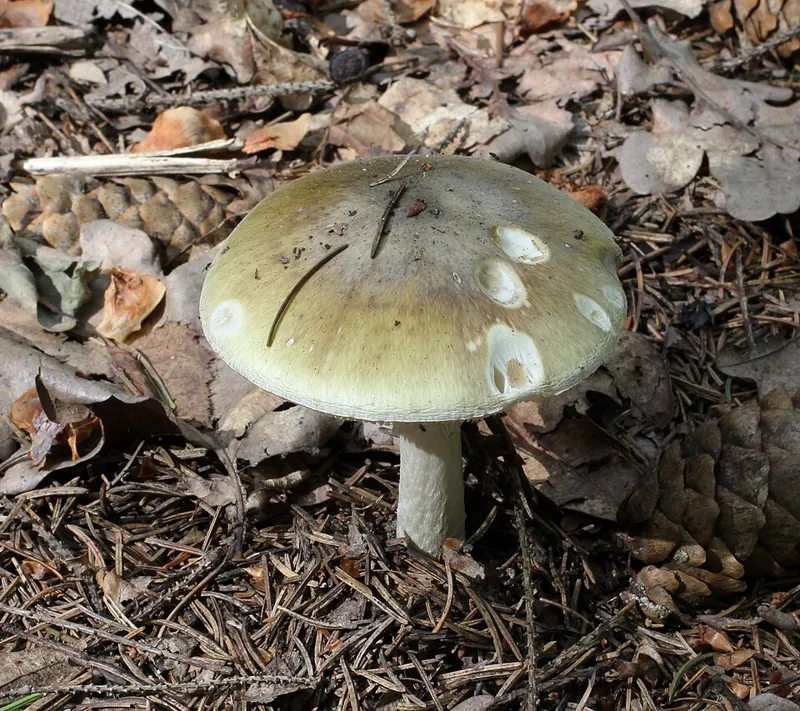
Deadly poisonous. A single mushroom can kill an adult. Responsible for most fatal mushroom poisonings in Central Europe. Cooking, drying or freezing do not destroy the toxin.
Recognise it safely – what matters
- Gills stay white
- Ring on the stem
- Bulb with a sac at the base – always dig up the whole mushroom, never cut it off
Features
- Cap
- 5–15 cm, olive to yellowish green, sometimes almost white; fine darker fibres radiate from the centre. Usually without veil remnants.
- Underside
- Gills: white, crowded, free – stay white with age, never pink or brown.
- Stem
- White with greenish-grey snakeskin pattern; white hanging ring. At the base a thick bulb with a membranous sac (volva) – often hidden in the soil.
- Flesh
- White, does not discolour.
- Smell
- Faint when young, sweetish and unpleasant when older (like artificial honey).
- Spore print
- White
Season
JFMAMJJASOND
Habitat
Broadleaf and mixed forests, especially under oak, beech and hornbeam, also in parks and on forest edges. Less often near conifers.
Ek, Bok, andra trädarter
Risk of confusion
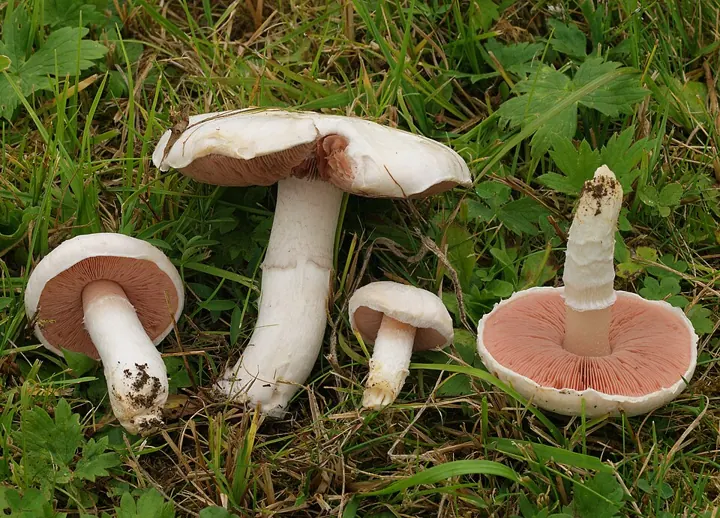 Champinjon Edible species Field mushrooms have pink, later chocolate-brown gills and no bulb with a sac.
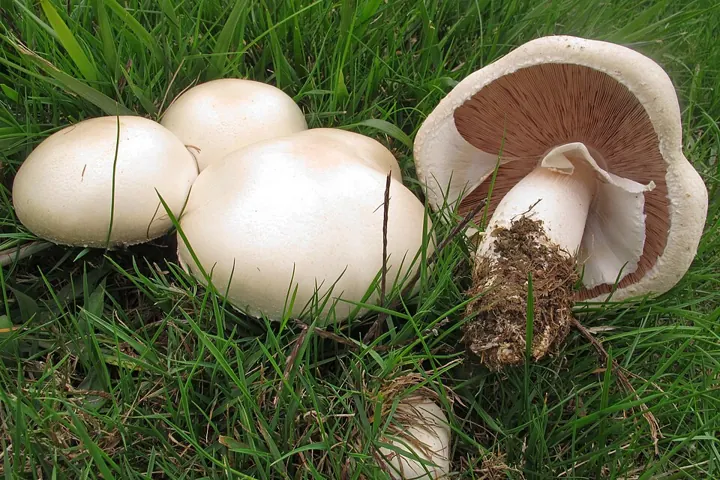 Anischampinjon Edible species The horse mushroom smells of aniseed and has greyish-pink to brown gills – the death cap's stay white.
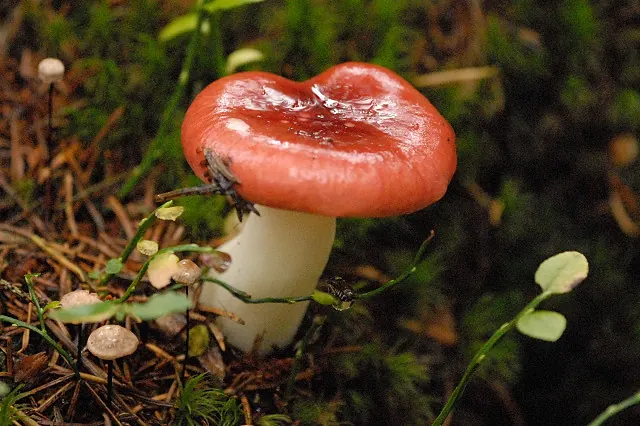 Kremla Edible species Green brittlegills have no ring and no bulb; their flesh breaks like chalk.
If someone has eaten it
Nothing at first. Then violent vomiting and diarrhoea, often followed by a deceptive improvement – while the liver is being severely damaged. Without early treatment, liver failure can follow. First symptoms: usually 6–24 hours after eating.
Act immediately – even without symptoms:
- Emergency number 112 if someone feels unwell.
- Poison centre: Germany – area code of the nearest city with a poison centre + 19240 (e.g. Berlin 030 19240, Munich 089 19240) · Austria +43 1 406 43 43 · Switzerland 145.
- Keep leftovers, trimmings or vomit – it helps with identification.
Never identify mushrooms by pictures or an app alone. When in doubt, ask a mushroom expert – and only pick what you know for sure.