
Honey fungus
Armillaria mellea · Honey fungi (Armillaria)
Poisonous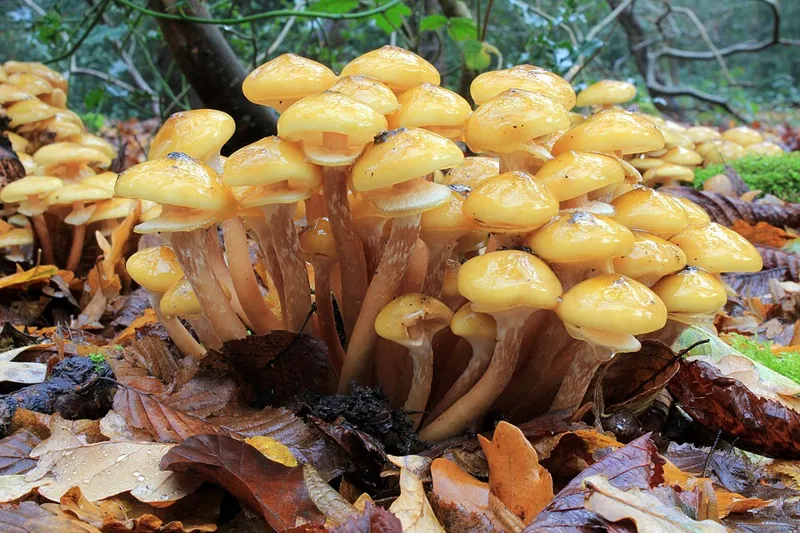
Poisonous raw. Listed in many books as edible after thorough cooking, but it repeatedly causes gastrointestinal poisoning – even when cooked.
Recognise it safely – what matters
- Large clusters on wood
- Cottony ring and white spore print (funeral bell: rust brown)
- Poisonous raw
Features
- Cap
- 3–10 cm, honey yellow to brown with fine dark scales.
- Underside
- Gills: whitish, later spotted brownish.
- Stem
- Fibrous, with a cottony, yellowish ring.
- Flesh
- Whitish
- Smell
- Mushroomy
- Spore print
- White
Season
JFMAMJJASOND
Habitat
In large clusters on stumps, roots and living trees; attacks broadleaf and coniferous wood.
Fijnspar, Beuk, Eik, andere boomsoorten
Risk of confusion
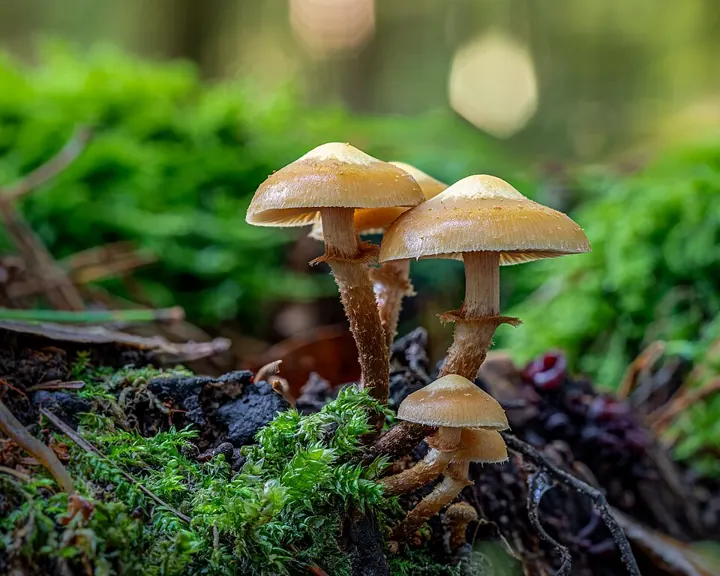 Gewoon zwavelkopje Edible species Sheathed woodtufts are smaller, have brown gills and a rust-brown spore print.
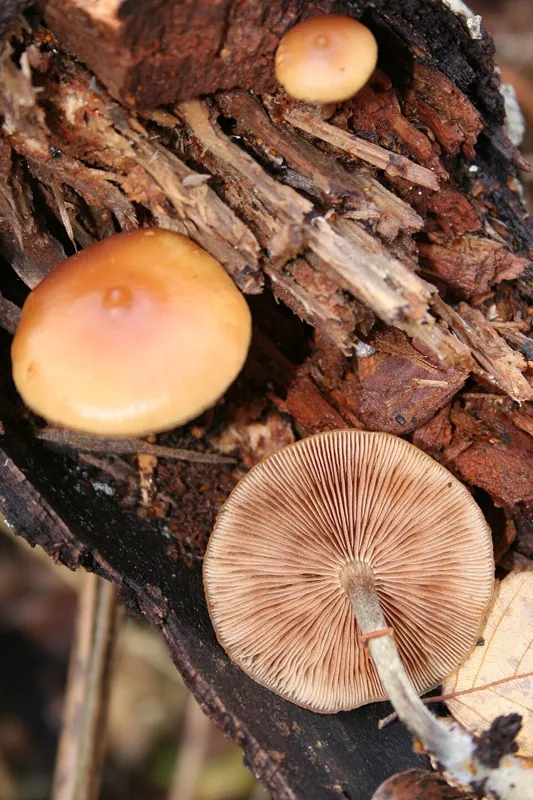 Funeral bell The funeral bell is smaller, has rust-brown gills and often grows on the same wood.
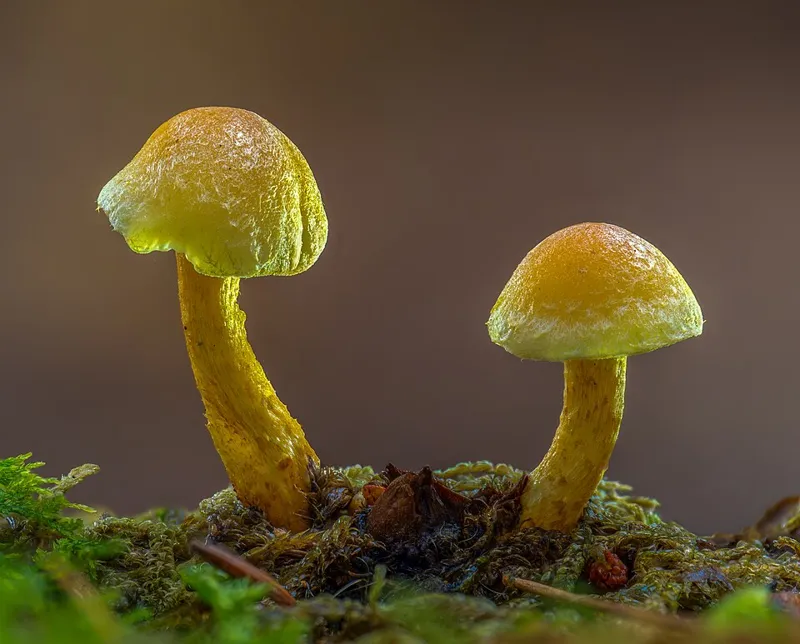 Sulphur tuft The sulphur tuft has sulphur-yellow caps and greenish gills.
If someone has eaten it
Violent vomiting, diarrhoea and stomach cramps; in children and older people the loss of fluids can become dangerous. First symptoms: usually 30 minutes to 4 hours after eating.
Act immediately – even without symptoms:
- Emergency number 112 if someone feels unwell.
- Poison centre: Germany – area code of the nearest city with a poison centre + 19240 (e.g. Berlin 030 19240, Munich 089 19240) · Austria +43 1 406 43 43 · Switzerland 145.
- Keep leftovers, trimmings or vomit – it helps with identification.
Never identify mushrooms by pictures or an app alone. When in doubt, ask a mushroom expert – and only pick what you know for sure.