
Champiñón silvestre or Champiñón amarilleante?
Champiñón silvestre: edible. Champiñón amarilleante: tóxica. Here is how to tell them apart – feature by feature.
El champiñón silvestre huele agradablemente a seta y no amarillea en la base del pie.
Champiñón silvestre edible

- Láminas de rosa a pardas, nunca blancas
- Sin bulbo ni volva en la base
- Crece en prados y pastos
Temporada: May–Oct
Champiñón amarilleante tóxica
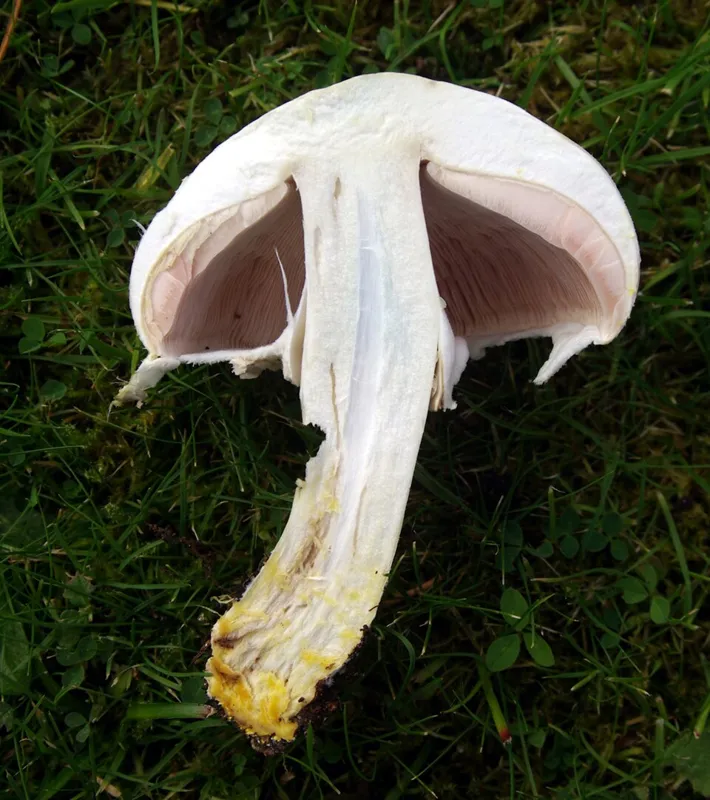
- Cut the stem base: instantly bright chrome yellow
- Smells of ink/phenol instead of aniseed or mushroom
- Likes parks and gardens
Temporada: Jun–Oct
Features side by side
| Champiñón silvestre | Champiñón amarilleante | |
|---|---|---|
| Sombrero | 3–10 cm, de blanco a crema, sedoso, algo escamoso al madurar. | 5–15 cm, white to greyish white, often somewhat angular in outline. |
| Underside | Láminas de jóvenes rosa vivo, luego pardo chocolate – nunca blancas. | Gills: pink when young, then chocolate brown. |
| Attachment | Láminas libres, no llegan al pie | Gills free |
| Stem | Blanco, con anillo fino y efímero; sin bulbo ni volva. | White with a membranous ring; the base turns bright chrome yellow immediately when cut. |
| Flesh | Blanca, algo rojiza al corte; buen olor a seta. | White, instantly bright yellow in the stem base. |
| Smell | – | Of ink or phenol, especially when heated. |
| Spore print | Pardo chocolate a pardo púrpura – las amanitas mortales tienen esporada blanca | Chocolate brown |
How dangerous is the mix-up?
Poisonous. One of the most common causes of poisoning with field-mushroom lookalikes.
Violent vomiting, diarrhoea and stomach cramps; in children and older people the loss of fluids can become dangerous. (usually 30 minutes to 2 hours after eating)
If you suspect poisoning, call poison control right away – even without symptoms – and keep any mushroom remains.
¿Dudas? Haz revisar cada hallazgo por un experto en setas antes de comerlo – gratis o barato, a menudo cerca de ti: DGfM-Pilzsachverständige (Germany) →Otros países: Austria · Switzerland · Italy · France · Norway · Sweden · Finland · Czechia. En otros lugares: pregunta a una sociedad micológica local, en una farmacia o al centro de información toxicológica.
More lookalikes
Preguntas frecuentes
How do you tell Champiñón silvestre and Champiñón amarilleante apart?
El champiñón silvestre huele agradablemente a seta y no amarillea en la base del pie.
Is Champiñón amarilleante poisonous?
Poisonous. One of the most common causes of poisoning with field-mushroom lookalikes.
When do symptoms appear after Champiñón amarilleante?
usually 30 minutes to 2 hours after eating. Violent vomiting, diarrhoea and stomach cramps; in children and older people the loss of fluids can become dangerous.
Enciclopedia de setas · Learn to forage mushrooms · Identify mushrooms by photo