
False morel
Gyromitra esculenta · False morels (Discinaceae)
Deadly poisonous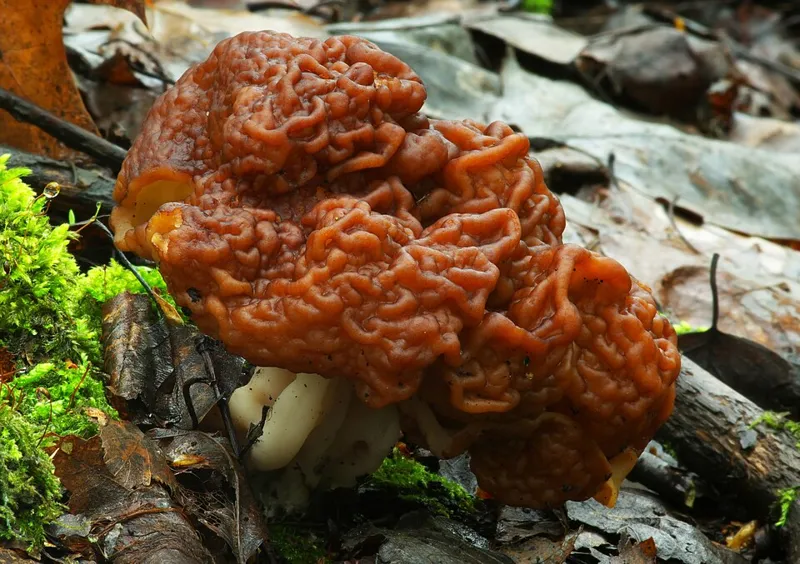
Deadly poisonous. The toxin is also released when cooking – even the fumes can be harmful. Once traded as edible; that is outdated.
Recognise it safely – what matters
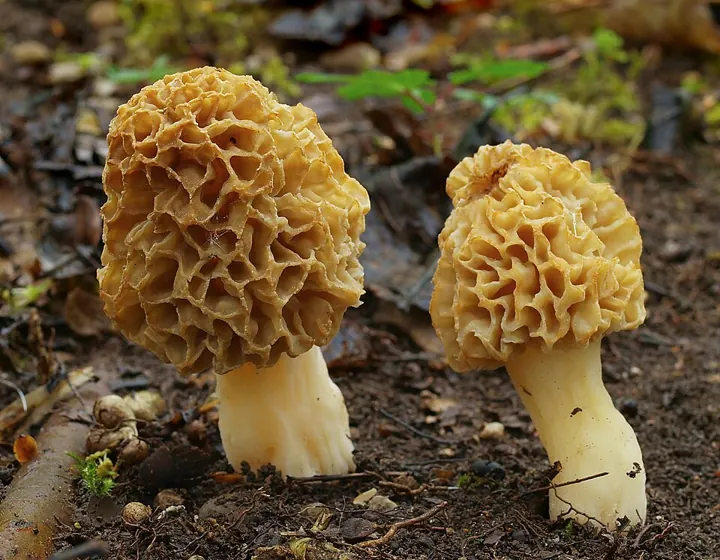
- Cap brain-like and convoluted, no honeycomb
- Cut lengthwise: several chambers (morel: one single continuous hollow)
- Spring, coniferous forest, sandy soil
Features
- Cap
- 3–10 cm, brown to reddish brown, irregularly brain-like and convoluted – without the honeycomb pits of a morel.
- Underside
- No gills or tubes; inside, the cap is divided into several chambers.
- Stem
- Whitish, short, irregularly furrowed, chambered inside.
- Flesh
- Waxy, brittle.
- Smell
- Slightly spicy
- Spore print
- Whitish
Season
JFMAMJJASOND
Habitat
Coniferous forests on sandy soils, especially near pine, often on clearings, by paths and near timber stacks.
Mänty, Kuusi
Risk of confusion
If someone has eaten it
Vomiting, diarrhoea, headache, weakness; later damage to the liver, kidneys and nervous system. First symptoms: usually 6–12 hours after eating.
Act immediately – even without symptoms:
- Emergency number 112 if someone feels unwell.
- Poison centre: Germany – area code of the nearest city with a poison centre + 19240 (e.g. Berlin 030 19240, Munich 089 19240) · Austria +43 1 406 43 43 · Switzerland 145.
- Keep leftovers, trimmings or vomit – it helps with identification.
Never identify mushrooms by pictures or an app alone. When in doubt, ask a mushroom expert – and only pick what you know for sure.